


The best Virtuagym alternatives for online coaches in 2026.
Virtuagym is a large, established platform, and for a gym, club, or multi-trainer operation it is genuinely capable. This guide is for the solo and small-team online coach it was not really built for. It names the strongest Virtuagym alternatives an online fitness coach actually runs a business on, several of them excellent, and it is honest about which buyer each one serves best, including where Virtuagym itself is the right call. The short version: most solo coaches leave for fit, not faults, and Coachway is the focused European pick for that fit.
By Markus Evers · Updated September 2026
How this comparison is made: we check every competitor's pricing and features against their live websites and re-verify them on a recurring basis. We build Coachway, so we flag it wherever it appears, we credit real competitor strengths, and we say who each platform fits better than us. Browse all platform comparisons.
the short version
For solo and small-team online fitness coaches, the best Virtuagym alternative is Coachway: it runs programs, nutrition, check-ins, chat and payments around each client in one tab instead of six, at transparent per-client pricing of EUR 69 per month for up to 5 active clients plus EUR 9 per additional client, with payments in the coach's own Stripe and a native-language client app included on every plan. The right pick still depends on the fit you are after. If you want unlimited clients on a flat plan and the widest client-app language coverage, Trainero is the standout. If you want a transparent, tiered all-in-one, HubFit is excellent. For larger, multi-staff operations, Exercise.com fits. And Virtuagym itself stays a strong choice for gyms, clubs, and multi-trainer businesses. The full breakdown, with what is and is not publicly priced and honest trade-offs, is below.
Why coaches look for a Virtuagym alternative.
First, credit where it is due. Virtuagym is a large, established platform built in Amsterdam, with a deep gym-management suite: member management, billing and recurring payments, scheduling, access control, a coaching module, a nutrition module, and a genuine white-label native app that gets its own listing in the Apple App Store and Google Play under the business's brand. By its own figures, Virtuagym serves 10,000+ fitness businesses across 80+ countries, the gym-and-club scale that shapes what the platform is built to do. Its own homepage describes the product as "All-in-One Software to Manage and Grow your Health Club or Studio Chain", the buyer it centers rather than the solo online coach. If you run a gym, a club, a boutique studio, or a multi-trainer operation, that breadth is a real strength. So this is not a list of reasons Virtuagym is bad. It is a list of fits it was never built to center, because most solo coaches who shop for an alternative do it for fit rather than faults. The most common reasons online fitness coaches look for an alternative to Virtuagym are: For the full picture of the platform itself, read our Virtuagym review.
- Per-coach pricing, not per-location. Virtuagym prices per location: its entry tiers run from EUR 19 (Manage) to EUR 58 (All-in-One) per month at up to 20 clients, rising with the client band, and larger bands and volume discounts go through sales. From Europe its English pricing page shows a demo request form, while the Dutch page lists the prices. A solo online coach pays for gym infrastructure they may not use, so coaches who want one simple per-client price look elsewhere.
- Native-language UI for Nordic or DACH clients. Virtuagym's personal-trainer page is published in five languages (English, Dutch, German, Spanish, French), and its App Store apps list 17 languages including Norwegian but not Danish, Swedish or Finnish. No Nordic languages appear. If you coach in Danish, Norwegian, Swedish, or Finnish, that is a gap on your client's phone.
- Your own Stripe. Virtuagym centers on its own integrated billing and does not publicly state that coaches can bring their own external Stripe account. Coaches who want payments to land in their own account look for a platform that allows it.
- A tool sized for one coach. Virtuagym's gravity, pricing model, and feature set lean toward physical-location gyms and multi-trainer businesses. A solo online coach can carry a lot of weight they will never use.
- Stronger, more accurate nutrition. Some reviewers report wanting more accuracy from Virtuagym's built-in food database on portions and macros, and pair it with a dedicated nutrition tool. Coaches who lean heavily on meal planning want tooling they can trust, so try the nutrition side yourself before committing.
If none of those apply to you, Virtuagym may well be the right call and you can stop reading here. If one or more do, the five alternatives below are ranked by how well they answer those specific fits. For the wider category beyond gym-management tools, our roundup of the best online coaching platforms for fitness coaches goes broader still.
The alternatives, compared.
| Platform | Best for | Pricing | Branded app |
|---|---|---|---|
| Coachway | Focused European solo online fitness coach | EUR 69/mo (up to 5 clients) + EUR 9/extra | Client app included, 6 languages |
| Trainero | Unlimited clients, widest client-app languages | Flat 30 and 60/mo tiers (currency shown ambiguously); White Label by quote | Full branded app on White Label tier (quote-based) |
| HubFit | Transparent all-in-one for solo coaches and teams | Tiered, transparent; Ultimate scales by client count | Premium tier (USD 69/mo) and up |
| Exercise.com | Larger, multi-staff fitness businesses | Quote-based; not publicly listed | Custom-branded apps included in platform |
| Virtuagym | Gyms, clubs, and multi-trainer operations | Per location: EUR 19-58/mo at up to 20 clients, rising with the client band; larger bands on quote | White-label native app (cost/tier not public) |
Note on pricing: Exercise.com does not publish a flat price on its own site, so its pricing is shown here as quote-based rather than as a number. Virtuagym's entry tiers are public on its Dutch pricing page (from Europe, its English page shows a demo request form instead), and larger client bands go through sales. Trainero displays flat tier numbers (30 and 60) whose currency follows the visitor region - EUR on its European pages, USD on the US page - so treat the currency as ambiguous. Pricing and features change, so confirm the current numbers with each provider before you commit; for Virtuagym's own tiers and how the client slider moves the price, see our Virtuagym pricing breakdown. For the full feature checklist behind these picks, see our online coaching platform guide.
01 · the focused european pick for the solo online fitness coach
Coachway
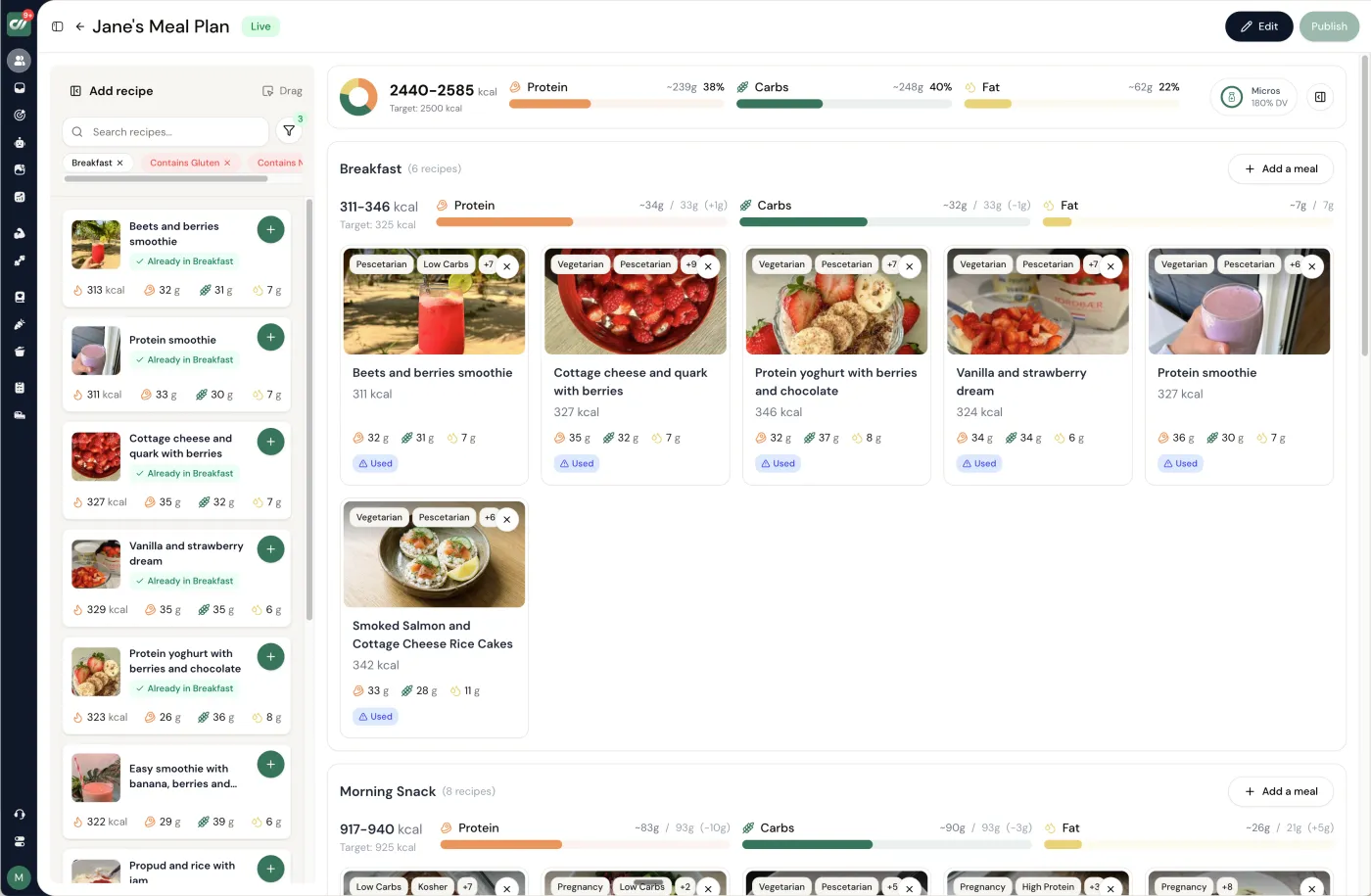
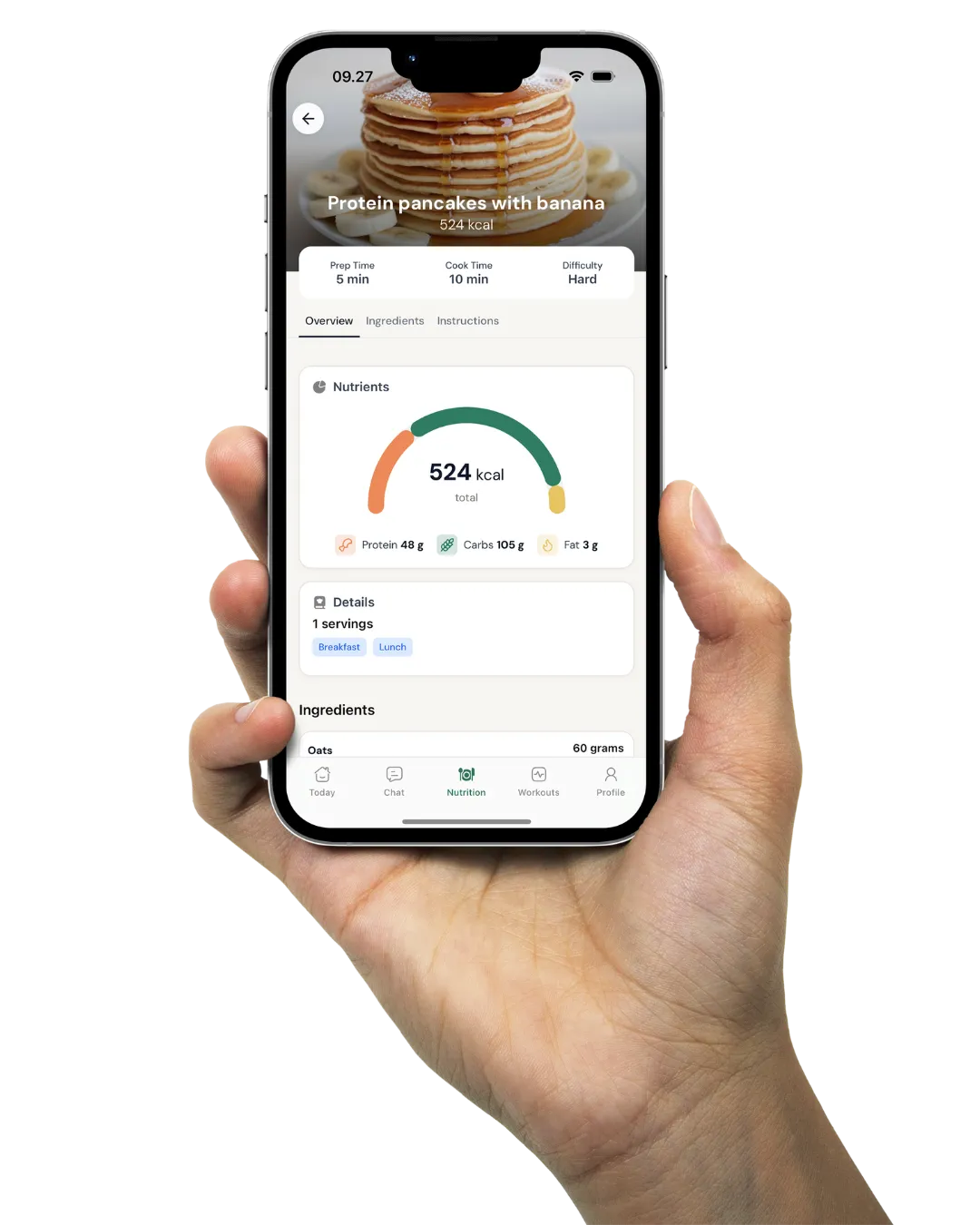
Coachway is the European-built platform that answers most of the reasons a solo coach leaves Virtuagym in one tool. Where Virtuagym is a broad gym-management suite with coaching as one module, Coachway is focused on the whole online fitness coaching workflow: handling everything around a single client from one tab instead of six, no jumping between WhatsApp, spreadsheets, a workout app, Stripe, and email, while raising the value and the experience for that client. The full stack is there: workout builder, nutrition and meal planning, weekly check-ins with progress photos and measurements, payments, automations, in-app messaging, and one client app on iOS and Android in six languages, carrying your own plans, check-ins and prices. The combination coaches switch for is transparent per-client pricing you can see without a sales demo, a client app written and reviewed by native speakers across six languages, payments that stay in the coach's own Stripe account, and same-day support from a team that has run coaching businesses. Built in Copenhagen, coaches across the Nordics, the UK, and Germany run their businesses on it today.
The trade-off: Coachway is purpose-built for the solo online coach, so the heavy gym-management machinery Virtuagym carries, member access control, club billing, multi-location, is deliberately not the point. If you run a physical location or a large multi-trainer business, you want that breadth. If you coach clients online, you get a tool focused entirely on that workflow, with the client app included on every plan, transparent per-client pricing, six native languages, your own Stripe, and same-day support. If you take payments through Coachway's built-in payment system, a 2.4% fee applies; your own Stripe checkout carries no Coachway fee.
Your clients need one app in their own language, with your plans inside it.
Software built for a facility revolves around the facility: members, access, club billing. An online client needs something narrower and deeper - their program, what to eat this week, and a place to report back. In Coachway each client picks their language (English, Danish, Norwegian, Swedish, Finnish or German) and finds your programs, meal plans and check-ins in one app on iOS and Android. The meal planner draws on 1,100+ recipes and 3,900+ ingredients with macros that scale to each client's targets, clients log food against a 3.7 million item database with barcode scanning, and you pay per active client rather than per location: EUR 69 per month for up to 5, then EUR 9 each.
02 · best for unlimited clients and language reach
Trainero
Trainero is the other Nordic-built option here, a Finnish platform that overlaps the same market as Coachway, and it has two genuine standout strengths. First, all of its paid plans carry unlimited clients, groups, and co-trainers, with the tiers limiting how many workout and diet plans you can build rather than how many people you coach. For a coach with a large client base built on a small set of plan templates, that flat model can work out very favorably. Second, its client app is translated into 38 languages, broader coverage than anything else on this list, so clients across many markets can use the app in their own language. Coaches keep their own payment account, with the online store stating payments arrive without intermediaries, and Stripe is among the many processors supported.
The trade-off: The plan-count model is a different shape than per-client pricing, so neither is universally cheaper, run the math for your own client base and plan library. Capterra reviewers also report nutrition and meal-plan inflexibility, such as not being able to offer alternative ingredients, and note that even on the paid white-label, some Trainero branding can still appear in certain areas of the app.
03 · best transparent all-in-one
HubFit
HubFit is a strong all-in-one and a clean answer to one of the most common Virtuagym gripes: transparent pricing you can read in full, at every tier, without a sales call. Training, nutrition, check-ins, and habit tracking are in every plan, the branded app and Stripe-powered branded checkout unlock from the Premium tier (USD 69/mo), and team and multi-coach management sit on higher tiers, with transparent, tiered pricing. If you value habit and challenge-led engagement and want to know exactly what you pay across each tier, it is one of the easiest platforms here to recommend without caveats.
The trade-off: HubFit serves solo coaches and teams alike and gates its branded app and built-in Payments to the Premium tier and up, so the entry plans do not include them. Its app supports 10 languages including Norwegian, but not Danish, Swedish, Finnish, or German, which matters if your clients use one of those.
04 · best for larger, multi-staff operations
Exercise.com
Exercise.com is the closest like-for-like to Virtuagym on this list: a US-built, broad all-in-one fitness business platform spanning gyms, studios, sports teams, and online coaching, with member management, scheduling, e-sign contracts, multi-location, marketing and CRM, integrated payments, and custom-branded iOS and Android apps that put your brand in the app stores. If your operation is large and multi-staff and you want one heavy system to run all of it, it earns its place. Its custom-branded apps are described as included in the platform. For the solo coaching angle specifically, see how Coachway compares to Exercise.com.
The trade-off: A Capterra reviewer states plainly that for a small studio seeking reliable support and accurate reporting, Exercise.com may not be the solution, and reviewers across sites cite a steep learning curve and a long, manual setup. For a solo online coach, that is a lot of weight to carry, and the quote-based pricing means you cannot size it up without a sales conversation.
05 · best for gyms and multi-trainer operations
Virtuagym
It is worth being clear about where the incumbent still wins. If you run a gym, a club, a boutique studio, or a multi-trainer operation, Virtuagym is a capable, mature choice, and for that buyer it may be the right tool rather than an alternative to leave. The membership management, billing, scheduling, and access control are core rather than bolted on, the coaching and nutrition modules cover the basics, and the white-label native app gets its own listing in the Apple App Store and Google Play under your brand. The reasons it appears on an alternatives list are about fit for the solo online coach, not about whether the product works for its intended market.
The trade-off: For a solo online coach, Virtuagym is more business than they run. Its per-location pricing is built for a facility, so a solo coach pays for gym infrastructure they may not use, larger client bands go through sales, the UI does not list Nordic languages, and some reviewers report wanting more accuracy from the built-in nutrition database. Confirm current pricing and contract terms with Virtuagym. Great for a gym, heavier than a one-coach client base needs.
How to choose your Virtuagym alternative.
The fair way to choose is to start from the exact fit that made you shop around, then pick the platform that answers it most directly. Write down the one or two reasons Virtuagym did not fit, and match them below. Most of these tools are good, and Virtuagym itself is a strong choice for the gyms and multi-trainer businesses it is built for, so this is about fit, not winners and losers.
- You want transparent per-client pricing and a native-language client app. Coachway. It is the only one here built solely around the solo online coaching workflow, with a client app reviewed by native speakers across six languages and included on every plan, transparent per-client pricing, and your own Stripe.
- You have many clients but few plan templates, or you need the widest client-app languages. Trainero. Unlimited clients on flat tiers and a client app in 38 languages.
- You want a transparent, tiered all-in-one that also serves teams. HubFit.
- You run a larger, multi-staff operation across in-person and online. Exercise.com, knowing the pricing is quote-based and the setup is heavier.
- You run a gym, club, or multi-trainer business. Virtuagym may still be the right tool. It is fine to stay.
If the workout builder is the deciding factor in either direction, our breakdown of the best workout builder apps for online personal trainers compares programming primitives and exercise libraries head to head, and you can sanity-check the per-client math against current Coachway pricing.
Frequently asked.
What is the best Virtuagym alternative for online coaches?
For solo and small-team online fitness coaches, the best Virtuagym alternative is Coachway: it runs programs, nutrition, check-ins, chat and payments around each client in one tab instead of six, at transparent per-client pricing of EUR 69 per month for up to 5 active clients plus EUR 9 per additional client, with payments in the coach's own Stripe. There is no single best for everyone, though: Virtuagym is an Amsterdam-built platform aimed mainly at gyms, clubs, studios, and multi-trainer operations, with coaching as one module. Trainero suits coaches wanting unlimited clients on a flat plan and the widest client-app language coverage; HubFit is a transparent, tiered all-in-one; Exercise.com suits larger, multi-staff operations.
Why do coaches look for an alternative to Virtuagym?
Usually it is about fit, not a weak product, since Virtuagym leans toward gyms, clubs, and multi-trainer operations. Solo online coaches shop around when they want pricing built per coach rather than per location (its public tiers start at EUR 19 per location per month for up to 20 clients and rise with the client band, with larger bands quoted by sales), an interface in their clients' own language (Virtuagym's apps list 17 languages in the App Store, including Norwegian but not Danish, Swedish or Finnish), payments in their own Stripe, and a tool sized for one coach. Some reviewers also want more accurate built-in nutrition data.
How much does Virtuagym cost, and are alternatives cheaper?
Virtuagym prices per location. Its Dutch pricing page lists Manage at EUR 19, Coach at EUR 39 and All-in-One at EUR 58 per location per month at up to 20 clients (EUR 17, 35 and 52 on annual billing), excluding VAT, and the price rises with the client band; from Europe the English pricing page shows a demo request form instead, and larger bands and volume discounts go through sales. Among alternatives, Trainero shows flat per-tier pricing at 30 and 60 per month with unlimited clients (currency ambiguous), Exercise.com is quote-based, and HubFit publishes transparent tiered pricing. Coachway uses transparent per-client pricing: EUR 69 per month for up to 5 active clients plus EUR 9 per additional active client, cancel anytime; the built-in payment system carries a 2.4% fee, while your own Stripe checkout carries no Coachway fee.
Is there a Virtuagym alternative with transparent pricing and your own Stripe?
Yes. Virtuagym publishes only its per-location entry tiers, quotes larger client bands through sales, and centers on its own integrated billing, rather than publicly stating coaches can bring their own Stripe. Coachway publishes exact per-client pricing (EUR 69 per month for up to 5 active clients plus EUR 9 per additional client) and lets coaches keep payments in their own Stripe, with a 2.4% fee only if they use the built-in payment system. Trainero also lets coaches keep their own payment account and supports Stripe, so Coachway and Trainero are the most direct answers.
Is there a European-built alternative to Virtuagym for solo online coaches?
Yes. Virtuagym is European, built in Amsterdam, but aimed mainly at gyms, clubs, and multi-trainer operations. Coachway is built in Copenhagen and purpose-built for the online fitness coaching workflow, with a client app reviewed by native speakers in English, Danish, Norwegian, Swedish, Finnish, and German, transparent per-client pricing, and payments in the coach's own Stripe. Trainero is Finnish-built and overlaps the same Nordic market, with a client app in 38 languages and unlimited clients on flat plans. For Nordic and DACH coaches, Coachway is the natural fit.
How do I switch from Virtuagym to Coachway?
There is no one-click Virtuagym-to-Coachway import, so moving is manual but usually light for a solo online coach, since there is no gym-management data to carry over. Export your client list, rebuild your programs in Coachway's workout builder and meal planner, invite clients into the Coachway client app, and point payments at your own Stripe. Most coaches rebuild one client end to end during the 14-day free trial before moving the rest. Stay on Virtuagym if you rely on gym-management pieces that do not transfer, such as member access control, club billing, or multi-location, because Coachway is built for the online coaching workflow rather than running a physical facility.
Switching from Virtuagym: what moving looks like.
Check your fit first. If you run a gym, a club, or a multi-trainer operation and lean on member access control, club billing, or multi-location, Virtuagym is built for that and staying put is a fair call. But if you coach clients online on your own, most of what you pay for there is facility machinery you never touch, and a tool built for the online personal training software workflow is the more direct fit for the same clients.
There is no one-click import, so moving is manual but usually light for a solo coach: rebuild your programs in the workout builder and meal planner, invite clients into the client app, run your whole client list from your phone in the Coachway coach app, and keep payments in your own Stripe. Most coaches rebuild one client end to end during the 14-day free trial before moving the rest - the trial below is where you start.
Features are not the deciding factor. The workflow is.
Virtuagym may match or beat Coachway on raw feature count, and that is fine. It is not the question that decides your week. What decides it is how fast you can run the actual work, week after week: following up a client, sending video feedback, and reviewing a weekly check-in. Coachway is built from working hands-on with online fitness coaches scaling past 1,000 clients, where shaving minutes off every client interaction is the whole game.
The entire product is tuned for one outcome: handle more clients, at a higher satisfaction rate, in less time. A smoother workflow is not just cheaper for you, it is a better experience for the client, and that is what keeps clients paying for longer.
check-ins
Review a weekly check-in in 3 to 5 minutes, with notes, data, photos, and exercise history in one view.
follow-up
Messages, video feedback, and plan tweaks happen from one tab, not six different tools.
automation
Automatic reminders run the cadence, and smart send asks you to confirm before a message goes out, so the experience stays personal.
See what Coachway can do for your coaching business
Coachway was built on knowledge from working with 150 online coaches over 6+ years, who all hit the same wall - slow platforms, clunky workflows, wasted hours. Start your 14-day free trial and see what we fixed - the whole platform, no charge today, cancel anytime under Billing.


See the head-to-head
Want the direct head-to-head? Read Coachway vs Virtuagym for the side-by-side on pricing, the client app, and support. Ready to leave? Our guide to switching from Virtuagym covers the exports, the notice periods and what happens on the portal lock date.
Keep reading
all guidesBuild your own coaching app, or use a platform?
An honest build-vs-buy guide for fitness coaches: the real cost and time of a custom app vs a branded app on a platform that is live in days.
Read the guideHIIT vs LISS: Which Is Better for Fat Loss?
HIIT vs LISS for fat loss, for coaches: results are similar when calories are matched, so adherence and recovery cost decide it. How to pick per client.
Read the guideHevy Coach vs TrueCoach: Honest 2026 Comparison
Hevy Coach and TrueCoach compared fairly: per-client-count vs per-active-client pricing, branded app, nutrition tools, Stripe payments and country support, and languages.
Read the guideFree tools for this: Coaching Profit Calculator · Client Capacity Calculator · Coaching Rate Calculator