Online coaching platform guide for fitness coaches.
An online coaching platform is the system a coach uses to deliver workouts, meal plans, check-ins, payments, progress tracking, and client communication without stitching together spreadsheets, WhatsApp, Stripe links, and PDFs. For online fitness coaches, the right platform saves 6 to 10 hours of admin a week, improves client accountability, and makes the coaching experience feel more premium.
By Markus Evers · Updated June 2026
the short version
The best online coaching platform is not the one with the longest feature list. It is the one that removes the most repeated admin from your week while keeping clients clear on what to do next. For fitness coaches, that means workouts, meals, check-ins, messages, progress, payments, and a client app in one system, with pricing that still makes sense when you grow from 20 clients to 100. For a picture of the actual market, see what software online fitness coaches use in 2026, and if you coach 1-on-1 training specifically, the personal training software guide goes deeper on that workflow.
The platform becomes your operating system.
Most coaches do not feel the cost of a messy software stack at 8 clients. They feel it at 35. One client is in WhatsApp, one is in a spreadsheet, one paid through a Stripe link, one sent progress photos in Instagram DMs, and three check-ins need answers before Monday morning. That is not a business system. That is a pile of tabs.
01
It protects delivery quality.
The platform should make it harder to forget a check-in, miss a payment issue, lose a progress photo, or answer a client without context.
02
It decides client capacity.
A coach with the wrong workflow burns out at 35 clients. A coach with structured check-ins, templates, automations, and one client record can handle far more without lowering quality.
03
It shapes perceived value.
Clients judge the coaching partly through the interface they use every week. A branded app feels premium. A shared spreadsheet feels like homework.
What online fitness coaching software should include.
These are not random features. These are the weekly surfaces that decide whether a coach can scale without becoming the bottleneck.
Workout builder
Programs, exercises, sets, reps, rest, supersets, alternatives, templates, notes, videos, and client logging. If the workout builder is slow, the whole platform feels slow.
see Coachway featureMeal planning and nutrition
Meal plans, recipes, macros, shopping lists, allergies, preferences, and adjustments. Coaches need nutrition delivery that scales without rebuilding PDFs every week.
see Coachway featureCheck-ins
Weekly forms, ratings, body measurements, progress photos, open-text questions, drafts, reminders, and coach review workflows. This is where retention is won.
see Coachway featureProgress tracking
Weight, measurements, progress photos, workout history, ratings, notes, and trend lines. The client needs proof. The coach needs signal before problems become churn.
see Coachway featureClient app
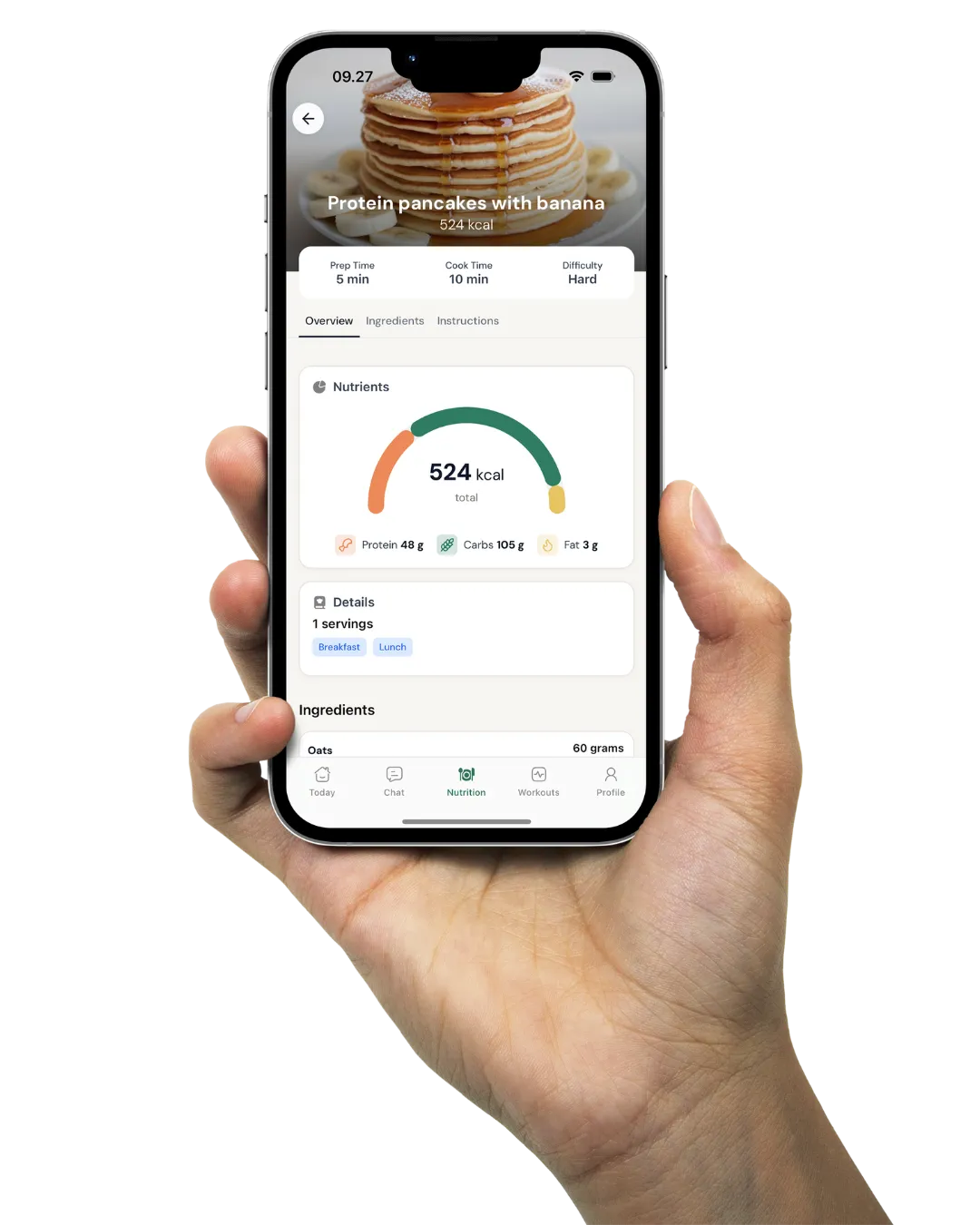
The client-facing experience has to feel premium, simple, and branded. Clients should open one app and know exactly what to do next.
see Coachway featurePayments
Subscriptions, upfront fees, recurring payments, planned invoices, and payment status should live near the client record. Coach-owned Stripe keeps the money path clean.
see Coachway featureCompare pricing at the size you want, not the size you have.
The cheapest platform at 5 clients is rarely the best platform at 80. That is where coaches make the expensive mistake. When you compare online coaching software pricing plans, model the cost at 20, 50, 100, and 150 clients before you move your business onto any platform. Flat tiers with client caps deserve the same math - see Kahunas pricing vs Coachway compared for a worked example of tier caps against per-client pricing.
Coachway pricing is EUR 69/month for up to 5 clients, then EUR 9 per additional client. Coaches connect their own Stripe, so client payments flow through the coach's account. If you use Coachway's built-in payment system, there is also a 2.4% transaction fee.
Coachway is for coaches who need the whole workflow in one place.
The team behind Coachway built the platform from operational experience working with 150 online coaches over 6+ years. That shows up in the product decisions: Power Panel for context, flexible workout and meal plan builders, check-in forms, client progress tracking, coach-owned Stripe, automations, lead management, and a branded client app.
best fit
Online and hybrid coaches.
Especially coaches managing workouts, nutrition, check-ins, and payments together.
market fit
European coaching businesses.
English, Danish, Norwegian, Swedish, Finnish, and German client flows matter here.
not best fit
Pure appointment booking.
If all you need is session booking for in-person PT, use a scheduling-first tool.
Five mistakes that make coaches switch again later.
Choosing the platform that looks best in a demo, instead of the platform that removes the most daily admin.
Comparing price at 5 clients instead of price at 50, 80, or 120 clients.
Ignoring migration until the week you need to switch.
Accepting English-only client flows when your clients actually speak Finnish, Norwegian, Danish, Swedish, or German.
Using separate tools for chat, payments, check-ins, workouts, and meals, then pretending the stack is cheap.
Frequently asked questions about online coaching platforms.
What is online coaching?
Online coaching is delivering personalized fitness, nutrition, or lifestyle guidance remotely instead of in person. A coach builds the program, then uses coaching software to send workouts, meal plans, and check-ins, track progress, message clients, and take payments through one client app.
What is an online coaching platform?
An online coaching platform is the system a coach uses to deliver workouts, meal plans, check-ins, progress tracking, payments, and client communication without stitching together spreadsheets, WhatsApp, PDFs, and separate payment links.
Should you build your own coaching platform or use one?
For almost every coach, buy rather than build. Creating your own coaching software means months of development plus ongoing hosting, app-store, payment, and security work before you coach anyone. Existing coaching software like Coachway already includes the workout builder, nutrition tools, check-ins, payments, and a branded client app, so you launch in days. Only consider building if you have a unique workflow no platform can support.
What should online fitness coaching software include?
The minimum stack is a workout builder, meal planning or nutrition tools, check-in forms, client progress tracking, in-app messaging, payments, automations, and a client app. If one of those lives outside the platform, it usually becomes admin work later.
When should I move from spreadsheets to a coaching platform?
Most coaches can survive on spreadsheets up to 10 to 20 clients. Past 30 clients, the admin starts eating the coaching. At that point, the platform is not a nice-to-have. It is the system that protects delivery quality.
How much does an online coaching platform cost?
Pricing varies by model. Coachway uses predictable per-client pricing: EUR 69 per month for up to 5 clients, then EUR 9 per additional client. If you use Coachway payments, the pricing page also lists a 2.4% transaction fee. Always compare the price at your target client count, not only your starting client count.
What should I compare in online coaching software pricing plans?
Compare the monthly base fee, cost per extra client, payment processing, white-label app costs, support access, migration help, feature gating, contract length, and the price at your expected client count in 12 months. The cheapest starter plan is often not the cheapest growth plan.
What is the difference between a workout app and an online coaching platform?
A workout app mainly delivers training programs. A coaching platform manages the whole client relationship: workouts, meals, check-ins, messages, progress, payments, and retention workflows.
Can I migrate clients from another platform?
Yes, but migration quality matters. You need to know what moves, what gets rebuilt, how clients are notified, and who owns the process. The safest migrations happen in a 1 to 2 week window with clear client communication.
Keep reading
all guidesEverfit pricing in 2026: every plan and add-on explained
Everfit pricing for 2026: the Free Starter plan, the Pro and Studio client-count sliders, and the add-ons that stack on top - plus how the real cost compares.
Read the guideTrainerize pricing in 2026: plans, add-ons, and real cost
A plain-language breakdown of Trainerize pricing in 2026, from the free plan through Grow, Pro, and Studio Plus, plus the three add-ons that decide your real all-in cost.
Read the guideCoachAccountable pricing in 2026: plans and real cost
CoachAccountable pricing explained: the full active-client ladder from USD 20 to USD 4,000 a month, the 30-day trial, the active-client model, and how Coachway compares.
Read the guideSee what Coachway can do for your coaching business
Coachway was built on knowledge from working with 150 online coaches over 6+ years, who all hit the same wall - slow platforms, clunky workflows, wasted hours. Start your 14-day free trial and see what we fixed - the whole platform, no charge today, cancel in 2 clicks.