Coachway vs Virtuagym: the honest comparison.
Coachway and Virtuagym are both European-built, but they are built for different businesses, and this comparison treats it that way. Virtuagym is a large, established Amsterdam platform aimed at gyms, health clubs, studios, and multi-trainer operations, with membership management, scheduling, access control, and billing as its core and coaching as one module. Coachway is purpose-built for the solo and small-team online fitness coach, focused purely on the 1:1 coaching workflow. Both are good software. The honest difference is fit, not flaws: Virtuagym runs a whole fitness business under one roof, while Coachway handles everything around a single client from one tab instead of six. The short version and a side-by-side table are right below.
By Markus Evers · Updated June 2026
How this comparison is made: we check every competitor's pricing and features against their live websites and re-verify them on a recurring basis. Coachway is our product - we flag it where it appears, we credit real competitor strengths, and we say who each platform fits better than us.
the short version
Both Coachway and Virtuagym are strong platforms, so choose by your situation. Pick Virtuagym if you run a gym, club, studio, or multi-trainer operation and you want membership management, scheduling, access control, and billing as core, with coaching as one module of a broad suite. Pick Coachway if you are a solo or small-team online fitness coach who wants a tool focused purely on the coaching workflow, a branded client app written and reviewed by native speakers across six languages, transparent per-client pricing, and your own Stripe. Virtuagym wins on running a whole physical-location fitness business under one roof. Coachway wins on online-coach focus, native-language Nordic and DACH UI, included branded experience, transparent per-client pricing, and same-day support. The full side-by-side, with where each one wins, is below.
Coachway vs Virtuagym, side by side.
| Coachway | Virtuagym | |
|---|---|---|
| Best for | Solo and small-team online fitness coaches in Europe | Gyms, clubs, studios, and multi-trainer operations |
| Pricing model | Per-client: EUR 69/mo up to 5 clients + EUR 9 each additional | Quote-based, on request; tailored by size and modules, no public self-serve trial |
| Payments | Your own Stripe, included on every plan | Own integrated billing (card, direct debit, terminals); own-Stripe option not stated publicly |
| Branded client app | Branded in-app experience included (your logo and colors in the app) | White-label native app with own app-store listing (cost and tier not public) |
| Native-language UI | EN, DA, NO, SV, FI, DE, reviewed by native speakers | 5 UI languages (EN, NL, DE, ES, FR); no Nordic languages |
| Support | Same-day human support from a team that has run coaching businesses | Standard platform support |
| Breadth vs focus | Focused on the online fitness coaching workflow | Broad gym-management suite with coaching as one module |
Pricing and features change. Confirm the current numbers with each provider before you commit; Virtuagym's pricing in particular is quote-based and only shared after a demo. For the wider field beyond these two, see our ranked list of the best online coaching platforms for fitness coaches.
Two good tools, built for different jobs.
It is worth saying this plainly before the detail: Virtuagym is a genuinely strong, established platform, and a lot of fitness businesses are very well served by it. This is not a teardown. The difference is one of design intent. Virtuagym was built to run a fitness business with a physical footprint, gyms, health clubs, boutique studios, and multi-trainer operations, which is exactly why its membership management, scheduling, access control, and billing are so capable; coaching sits inside that as one module. Coachway is built around one buyer, the online fitness coach, and one job, handling everything around a single client from one tab instead of six, no jumping between WhatsApp, spreadsheets, a workout app, Stripe, and email, while raising the value and the experience for that client.
This comparison is built from operational experience, working with online coaches over many years, running real coaching businesses rather than reading spec sheets. That is the lens for everything below. If you want the full feature checklist behind these criteria, our online coaching platform guide walks through the entire stack, and if your decision is mostly about the admin and CRM side, the companion piece on the best client management software for personal trainers goes deeper there.
where virtuagym wins
Virtuagym
Virtuagym is one of the most established names in fitness business software, founded in Amsterdam in 2008, and there are real reasons operators choose it. Its biggest strength is breadth across a physical-location business. Membership and member management, recurring billing, scheduling and bookings, and access control are all core, alongside a coaching module that assigns workout plans, tracks performance, and handles coach-client messaging. It offers a genuine white-label native app, your own listing in the Apple App Store and Google Play under your brand, with help setting it up, which is a real capability that not every platform has. Client engagement tooling, challenges, reminders, progress tracking, and goal-based milestones, is well developed, and the platform is built to hold a multi-trainer team and a gym floor under one roof. If your business has a physical footprint or many staff, Virtuagym is purpose-built to hold all of that together.
Choose Virtuagym if: you run a gym, club, studio, or multi-trainer operation, you need membership management, access control, and scheduling as core, and you want a single suite to hold a physical fitness business together. None of this is a weakness in Coachway, it is simply a different design target.
where coachway wins
Coachway
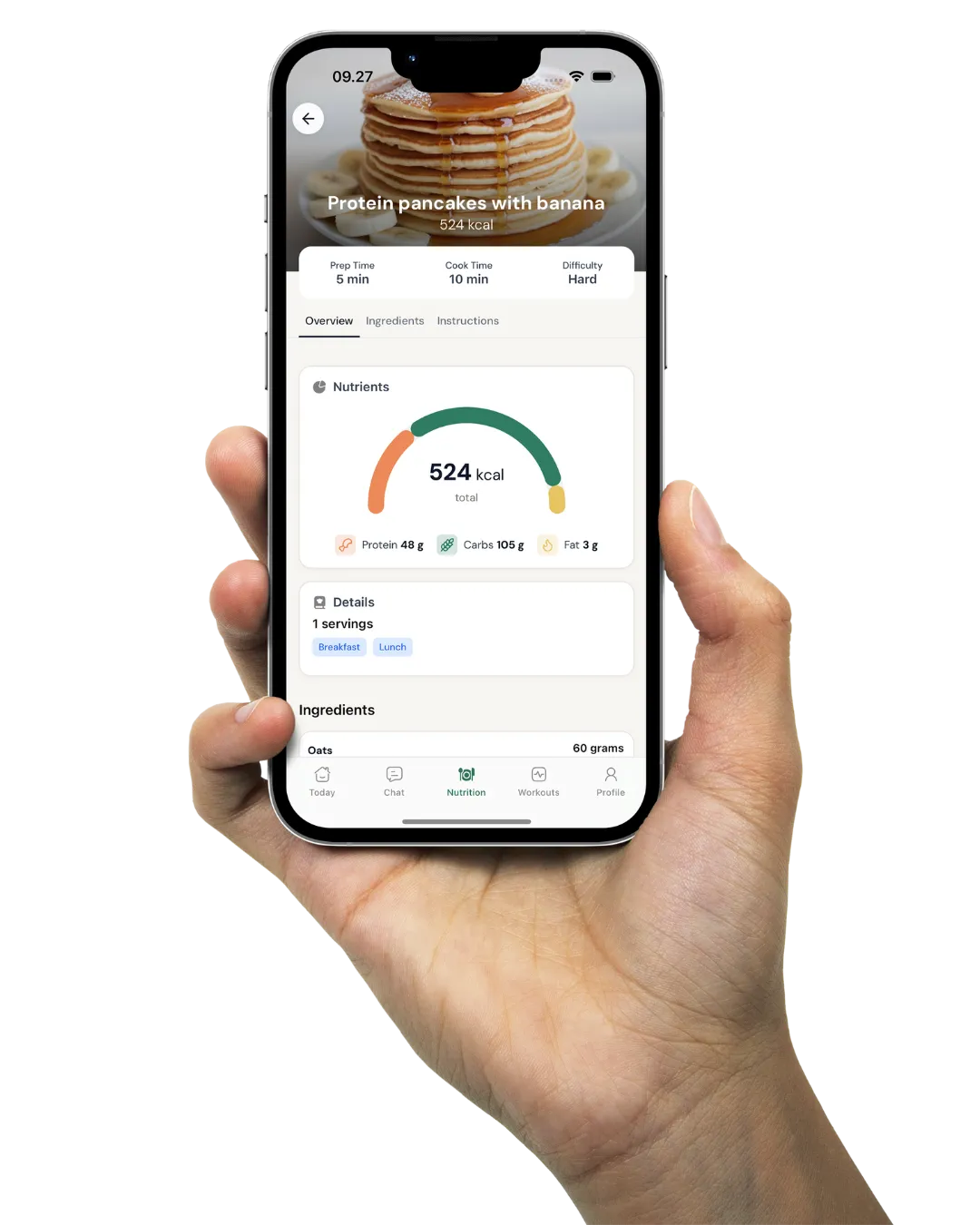
Coachway trades Virtuagym's gym-and-team breadth for depth on one specific buyer. Where it pulls ahead is for the online fitness coach who lives entirely in the 1:1 coaching workflow. Because the product is focused on that single job, the path from a new client's intake to a delivered program, a meal plan, and a weekly check-in is built to move in as few steps as possible, and the nutrition side is a curated, coach-focused library of 1,100+ recipes, 3,900+ ingredients, and 1,800+ exercises rather than a raw database to wrangle. The client experience reflects that too: coaches brand the in-app experience with their own logo and colors at no extra cost, while the entire UI, the part your clients actually see and use, is written and reviewed by native speakers across English, Danish, Norwegian, Swedish, Finnish, and German. For a coach in the Nordics or DACH, that native-language client app is the difference between an interface that feels local and one that feels translated. Pricing is transparent and predictable per-client, EUR 69 per month for up to 5 clients plus EUR 9 per additional client, published on the site with all features included from day one and cancel anytime, so you see the number before you talk to anyone. Payments stay in your own Stripe account, and support is answered same-day by humans, by a team that has run coaching businesses. Coaches across the Nordics, the UK, and Germany run their businesses on it today.
Choose Coachway if: you are an online fitness coach scaling a 1:1 roster, you want everything around a client in one tab instead of six, a native-language branded app for Nordic or DACH clients, transparent per-client pricing you can see upfront, your own Stripe, and same-day human support. If you also need to run a gym floor, access control, and a multi-trainer team under one roof, Virtuagym's breadth may serve you better.
A fair word on Trainero.
If you are weighing Virtuagym, you are probably also looking at Trainero, the Finnish coaching platform, and it deserves a straight assessment. Trainero is genuinely strong in two areas worth naming openly: its client app supports 38 languages, which is far broader than Coachway's six, and its standard plans come with unlimited clients, groups, and co-trainers, where the limiting factor is how many plans you build rather than how many clients you carry. For a coach with a very large roster but few plan templates, that flat model can work out well. Like Coachway, Trainero lets coaches keep their own payment account and supports many processors including Stripe, and it gates a fully branded app to a quote-based White Label tier.
So where does Coachway fit against it? Not on language count or headline price, those are model differences, not winners. Coachway's case is native depth and integrated workflow: a coach and client UI written and reviewed by native speakers across six Nordic and DACH languages rather than a broad set of translations, a curated nutrition content library built around the coaching workflow, everything around a single client handled from one tab, transparent per-client pricing you can see before talking to sales, and same-day human support. If your priority is the broadest possible client-app language list or a flat unlimited-client price, look closely at Trainero. If it is native Nordic-language depth, nutrition content, and a tightly integrated 1:1 workflow, that is Coachway's lane.
Which should you choose?
The decision really comes down to one question: does your business have a physical footprint and a team to run, or is it one focused online coaching workflow? If the former, Virtuagym is built for that. If the latter, Coachway is built for that. Here is the fair way to land it.
- You run a gym, club, or studio, or a multi-trainer operation. Virtuagym. Membership management, access control, scheduling, and billing are core, and it is purpose-built to hold a physical fitness business and a staff team together.
- You are a solo online fitness coach scaling a 1:1 roster. Coachway. The workflow is built for exactly that, with transparent per-client pricing that tracks how many clients you carry.
- You coach in Danish, Norwegian, Swedish, Finnish, or German. Coachway. Its client app and coach UI are reviewed by native speakers in those languages. Virtuagym's PT page lists 5 UI languages, English, Dutch, German, Spanish, and French, with no Nordic languages.
- You want to see the price before you talk to sales. Coachway. Its per-client pricing is published; Virtuagym's is quote-based and shared after a 25-minute demo, generally on annual contracts.
- You want your brand inside the client app at no extra cost, and your own Stripe. Coachway. The in-app branding is included, and payments flow through your own Stripe account.
- Your clients are primarily Dutch, Spanish, or French speaking, and you need a physical-location feature set. Virtuagym. Those languages are covered, and the gym-management suite is its strength.
Still weighing it up? Our walkthrough on choosing an online coaching platform turns this into a step-by-step shortlist, and you can sanity-check the per-client math against current Coachway pricing.
Frequently asked.
Is Coachway or Virtuagym better for online fitness coaches?
Both are good, and the right answer depends on the shape of your business. Virtuagym is the stronger pick if you run a gym, a health club, a boutique studio, or a multi-trainer operation and you want membership management, access control, scheduling, and billing as core, with coaching as one module of a larger suite. Coachway is the stronger pick if you are a solo or small-team online fitness coach who wants a tool focused purely on the coaching workflow, a native-language client app across EN, DA, NO, SV, FI, and DE, transparent per-client pricing, and your own Stripe. Neither is better in the abstract. They fit different businesses.
How does Coachway pricing compare to Virtuagym pricing?
The two use different models, and they sit at different ends of the transparency spectrum. Virtuagym does not publish flat-rate prices on its own site; its pricing is quote-based, tailored by business size, client or member volume, and the modules you select, and you book a 25-minute demo to get a number. There is no public self-serve free trial, and contracts are generally annual. Coachway uses transparent, predictable per-client pricing: EUR 69 per month for up to 5 active clients plus EUR 9 per additional active client, with all features included from day one and cancel anytime. If you take payments through Coachway's built-in payment system, an optional 2.4% per-transaction fee applies; your own Stripe checkout carries no Coachway fee. If you want to see the price before you talk to sales, Coachway publishes it; Virtuagym tailors a quote to your operation.
Do I keep my own Stripe account on Coachway and Virtuagym?
On Coachway, yes: it connects to your own Stripe account, so the billing relationship with your clients stays yours, and the built-in payment system is optional. Virtuagym centers on its own integrated billing system, with credit card, direct debit, automated payment follow-up, in-app purchases, and card terminals oriented around recurring gym memberships. Whether a coach can connect their own external Stripe account is not something Virtuagym states publicly, so we will not claim it either way. If keeping your own Stripe is important to you, confirm it with Virtuagym directly; on Coachway it is the default.
Which platform is better for coaching in Danish, Norwegian, Swedish, Finnish, or German?
Coachway is the natural fit for the Nordics and DACH. Its client and coach UI is written and reviewed by native speakers across English, Danish, Norwegian, Swedish, Finnish, and German, so the experience your clients see in the app reads naturally rather than machine-translated. Virtuagym's own personal-trainer page lists 5 UI languages, English, Dutch, German, Spanish, and French, and does not list any Nordic languages. For Danish, Norwegian, Swedish, and Finnish rosters, Coachway is the deeper native-language fit. If your clients are primarily Dutch, Spanish, or French speaking, Virtuagym covers those.
Is the branded client app included on Coachway and Virtuagym?
Both offer a branded app, so this is not a point where Coachway is unique. Virtuagym offers a genuine white-label native app with its own listing in the Apple App Store and Google Play under the business's brand, and its team helps with setup; whether that app is included or a paid add-on, and on which tier, is not disclosed publicly. Coachway includes a branded in-app experience, your logo and colors inside the Coachway app, at no extra cost, and a full white-label app is available for larger coaches. The honest difference is not whether a branded app exists, it is the pricing transparency and the focus of the underlying product.
How hard is it to switch from Virtuagym to Coachway?
Most coaches complete a platform switch in 1 to 2 weeks: move your client list and programs across, then switch clients over in waves rather than a hard cutover. Coaches with 30 to 100+ clients typically keep retention above 95 percent when the move is run as a structured, step-by-step migration. Coachway itself has no lock-in: client data, programs, check-ins, and payment schedules export as CSV and PDF at any time.
Features are not the deciding factor. The workflow is.
Virtuagym may match or beat Coachway on raw feature count, and that is fine. It is not the question that decides your week. What decides it is how fast you can run the actual work, week after week: following up a client, sending video feedback, and reviewing a weekly check-in. Coachway is built from working hands-on with online fitness coaches running rosters past 1,000 clients, where shaving minutes off every client interaction is the whole game.
The entire product is tuned for one outcome: handle more clients, at a higher satisfaction rate, in less time. A smoother workflow is not just cheaper for you, it is a better experience for the client, and that is what keeps clients paying for longer.
check-ins
Review a weekly check-in in minutes, with notes, data, photos, and exercise history in one view.
follow-up
Messages, video feedback, and plan tweaks happen from one tab, not six different tools.
automation
Automatic reminders run the cadence, and a smart-send mode holds messages back when a client still has an unread one, so the experience stays personal.
Keep reading
all guidesCoachway vs Hevy Coach: the honest comparison (2026)
Hevy Coach wins on affordable workout delivery and its beloved consumer app; Coachway on nutrition, check-ins, payments, and a branded client app.
Read the guideHevy Coach alternatives: 6 best picks for coaches (2026)
The best Hevy Coach alternatives for coaches who need nutrition, check-ins, payments, or a branded app alongside workout delivery.
Read the guideCoachway vs Kahunas: honest comparison (2026)
Kahunas's unlimited Ultimate tier genuinely wins at volume - the fair comparison on pricing math, branded app access, nutrition, and languages.
Read the guideSee what Coachway can do for your coaching business
Coachway was built after working with 150+ coaches who all had the same frustrations - slow platforms, clunky workflows, wasted hours. Book a demo and see what we fixed. 15 minutes, and you'll know if it's the right fit.